Ultimate Guide: Finding the Best AI Tools for Student Success in 2026
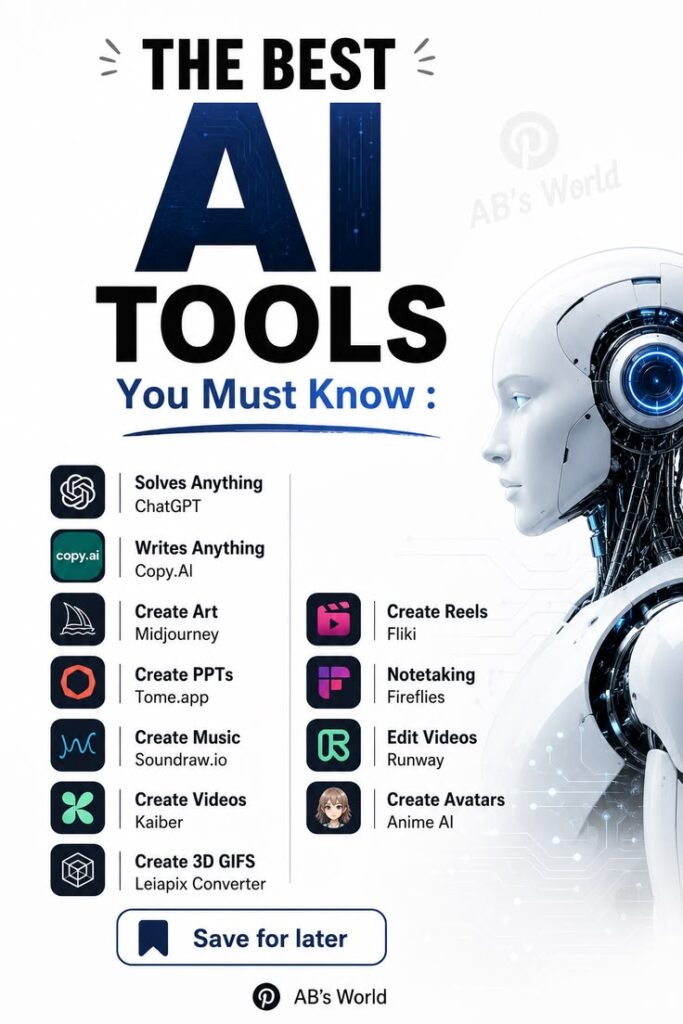
The educational landscape is shifting faster than ever before. If you are trying to keep up with demanding assignments, endless lectures, and complex projects, you probably already know that traditional study methods are no longer enough. Finding the best AI tools for student use can completely transform how you approach your coursework. Instead of pulling all-nighters or struggling with confusing concepts alone, you can leverage smart technology to study more efficiently. These applications do not just provide quick answers; they genuinely help you grasp difficult materials and organize your academic life. Embracing these modern applications requires a shift in mindset. You should not view them as shortcuts for cheating, but rather as personalized digital tutors available around the clock. Whether you need help drafting a thesis, debugging computer code, or summarizing a fifty-page textbook chapter, there is a specialized application ready to assist. As we move deeper into 2026, the software market has exploded with specialized options tailored for different academic majors. Choosing the right software can reduce your stress levels, improve your grades, and leave you with more free time. Many undergraduates ask exactly where to start learning artificial intelligence basics before diving into these advanced study aids. You do not need to be a computer science major to understand how machine learning works. Numerous online platforms offer introductory courses designed specifically for complete beginners. Websites like Coursera, edX, and Khan Academy provide free modules covering neural networks, natural language processing, and deep learning fundamentals. Gaining a basic understanding of these underlying technologies helps you use educational software much more effectively and ethically during your academic career. If you want to know where to start learning artificial intelligence practically, the easiest way is simply by using generative models daily. Interacting with chatbots teaches you how to craft effective prompts and understand machine logic. You quickly learn that the quality of the output depends entirely on the clarity of your instructions. By experimenting with different prompts, you are essentially learning the basics of prompt engineering. This hands-on experience is incredibly valuable, giving you a competitive edge in both your current studies and your future professional career. Let us dive into the top 10 AI tools currently dominating the educational space. These applications have been rigorously tested and proven to boost productivity across various subjects. First on our list is ChatGPT, which remains the undisputed king of versatile assistance [1.1.2, 1.1.4]. It excels at explaining confusing theories, generating essay outlines, and acting as a conversational study buddy [1.1.2]. Next is Perplexity AI, a massive upgrade for anyone tired of standard search engines. It acts as a citable research assistant, pulling information from credible web sources and providing exact links to its references [1.1.2, 1.1.3]. Continuing with our top 10 AI tools, we have Claude. This platform shines when it comes to analyzing massive documents. You can upload a lengthy research paper, and Claude will break down the core arguments without losing the nuanced details [1.1.3, 1.2.5]. Grammarly takes the fourth spot, moving beyond basic spell-checking to offer deep stylistic suggestions that make your writing sound professional [1.1.2]. For visual learners, Gamma AI is a lifesaver. It automatically generates beautiful, professional-looking presentations and slide decks from a simple text prompt, saving you hours of tedious formatting work [1.1.4, 1.2.1]. Halfway through the list, we find Notion AI. This workspace powerhouse helps you manage your weekly class schedule, track assignment deadlines, and organize research notes in one clean dashboard [1.1.3]. Quizlet AI takes the seventh spot, using intelligent algorithms to generate interactive flashcards and practice quizzes directly from your uploaded materials [1.1.1, 1.1.2]. For students dealing with audio lectures, Otter.ai is phenomenal. It automatically transcribes spoken words into searchable text, ensuring you never miss a crucial detail your professor mentions during a fast-paced classroom discussion [1.1.1, 1.1.2]. Rounding out our list are two highly specialized platforms. Mendeley is an absolute necessity for anyone working on research-intensive projects, as it automatically formats citations and manages academic papers seamlessly [1.1.2]. Finally, we have NotebookLM, Google’s incredible offering that grounds its answers purely in the documents you upload [1.1.1]. This prevents the software from hallucinating fake facts, making it arguably the most reliable study partner available. By integrating these ten diverse applications into your daily routine, you can drastically cut down on wasted time and focus on actual learning and comprehension. Quick Comparison of the Top Study Assistants Here is a breakdown to help you choose the right application based on your specific needs: Software Name Best Used For Key Feature ChatGPT General study help Conversational learning Perplexity AI Researching topics Clickable web citations Claude Document analysis Long-context understanding Grammarly Proofreading text Stylistic writing improvements Gamma AI Making presentations Auto-generated slide decks Notion AI Organizing schedules All-in-one workspace Quizlet AI Memorizing terms Smart interactive flashcards Otter.ai Recording lectures Automatic audio transcription Mendeley Managing references Automated academic citations NotebookLM Safe data review Source-grounded answers Taking good notes is the foundation of academic success, which brings us to the best AI tools for students for notes. Capturing information effectively during a lecture is notoriously difficult. Thankfully, modern software can take a messy, unorganized brain dump and turn it into a structured, highly readable outline. NotebookLM is currently leading the pack in this category [1.1.1]. You can drop in PDFs, lecture slides, and personal jottings, and the system will create a cohesive study guide that links everything together seamlessly without inventing fake information [1.1.1, 1.2.1]. Another fantastic option among the best AI tools for students for notes is Storyflow [1.1.1]. This application is perfect for visual thinkers who prefer mind maps over linear text documents. It reads your entire study canvas and helps you structure your writing logically [1.1.1]. If you prefer a more traditional document setup, Notion AI remains an excellent choice for organizing text-heavy lecture notes [1.1.2]. You can ask it to instantly summarize lengthy paragraphs, generate action items for upcoming group projects, and build comprehensive tables directly within your customized digital workspace [1.1.2, 1.1.3]. There