Introduction
Imagine opening a shop in the middle of a busy city where millions of people pass by every day. Instead of waiting for customers to walk into your store, you can directly reach them on their phones, laptops, tablets, and social media. That’s exactly what digital marketing does.
Digital marketing has become one of the most valuable skills in today’s world. Whether you’re a student, freelancer, entrepreneur, small business owner, or someone looking to build a career online, understanding digital marketing can open countless opportunities.
In this guide, you’ll learn everything you need to know about digital marketing—from the basics to advanced strategies—in simple language.
What is Digital Marketing?
Digital marketing is the process of promoting products, services, or brands using the internet and digital platforms.
Instead of using newspapers, TV advertisements, or billboards, businesses use:
- Websites
- Search Engines
- Social Media
- Mobile Apps
- Online Advertising
- Videos
- Blogs
to reach potential customers.
Simple Example
Suppose you own a bakery.
Instead of printing thousands of flyers, you can:
- Create an Instagram page.
- Run Facebook Ads.
- Show your bakery on Google Maps.
- Rank your website on Google.
- Send offers through email.
This entire process is digital marketing.
Why is Digital Marketing Important?
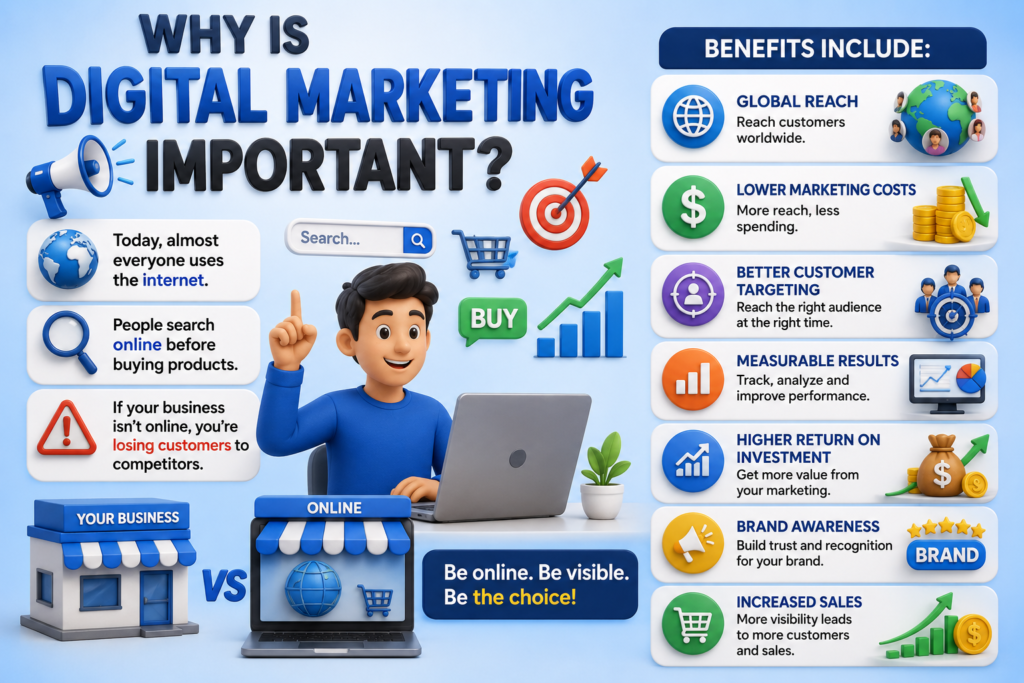
Today, almost everyone uses the internet.
People search online before buying products.
If your business isn’t online, you’re losing customers to competitors.
Benefits include:
- Global reach
- Lower marketing costs
- Better customer targeting
- Measurable results
- Higher return on investment
- Brand awareness
- Increased sales
1. Search Engine Optimization (SEO)
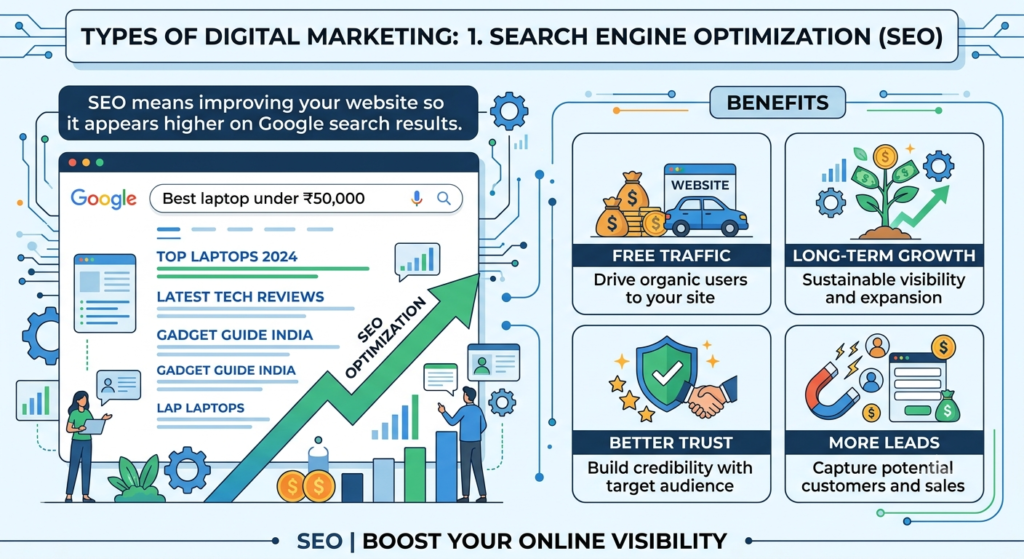
SEO means improving your website so it appears higher on Google search results.
Example:
When someone searches:
“Best laptop under ₹50,000”
Google shows websites on the first page.
SEO helps your website appear there.
Benefits
- Free traffic
- Long-term growth
- Better trust
- More leads
2. Search Engine Marketing (SEM)
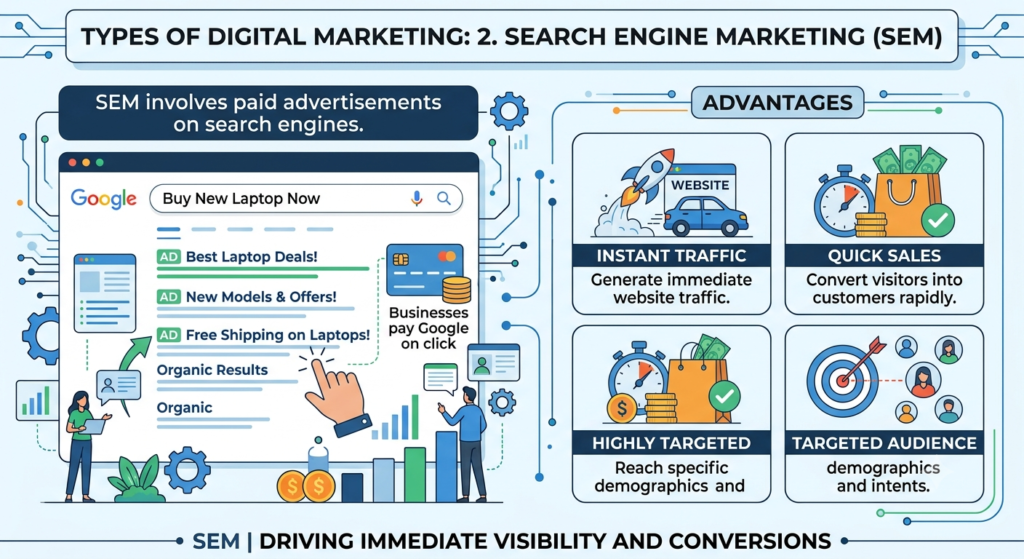
SEM involves paid advertisements on search engines.
Example:
Google Ads.
Businesses pay Google whenever someone clicks their advertisement.
Advantages:
- Instant traffic
- Quick sales
- Highly targeted audience
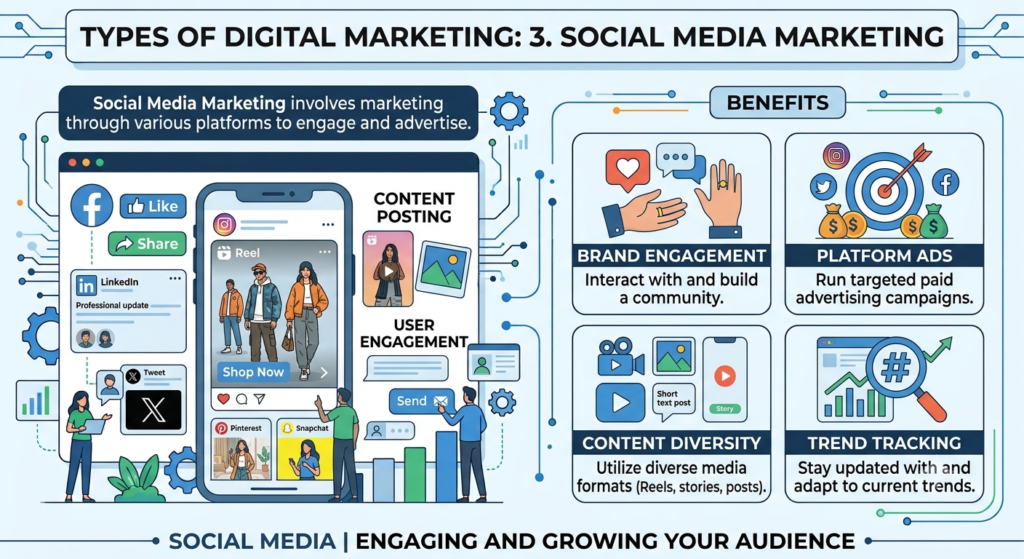
3. Social Media Marketing
Marketing through social platforms like:
- X (Twitter)
- Snapchat
Businesses post content, engage users, and run advertisements.
Example:
A clothing brand posts Reels showcasing new fashion collections
4. Content Marketing
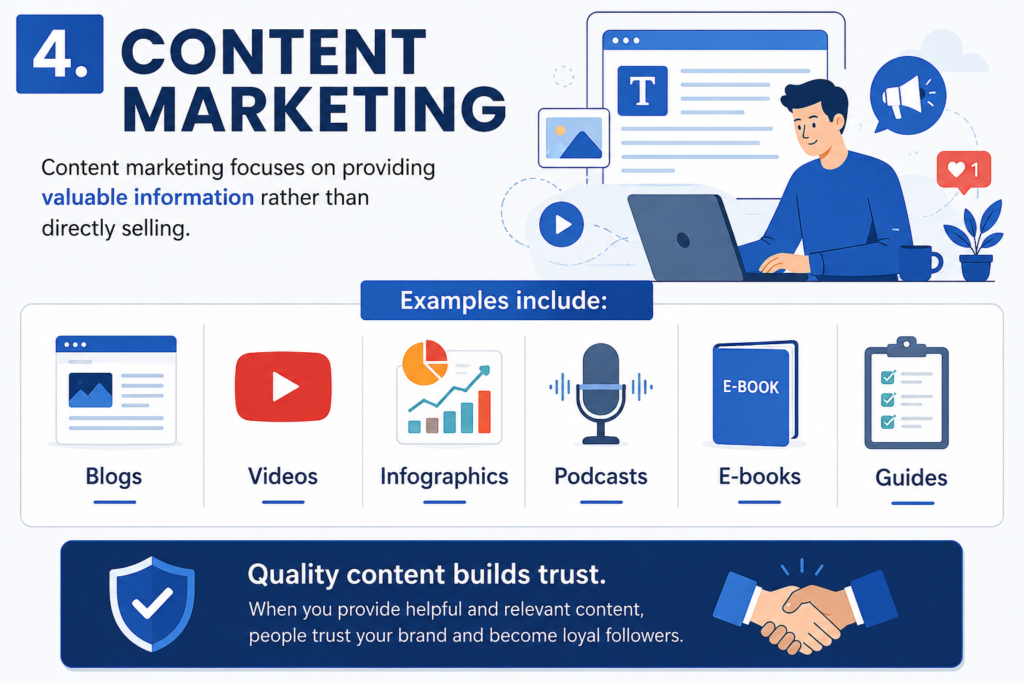
Content marketing focuses on providing valuable information rather than directly selling.
Examples include:
- Blogs
- Videos
- Infographics
- Podcasts
- E-books
- Guides
Quality content builds trust.
5. Email Marketing
Businesses send personalized emails to customers.
Examples:
- Welcome emails
- Discount offers
- Product launches
- Newsletters
Email marketing remains one of the highest ROI marketing channel
6. Affiliate Marketing
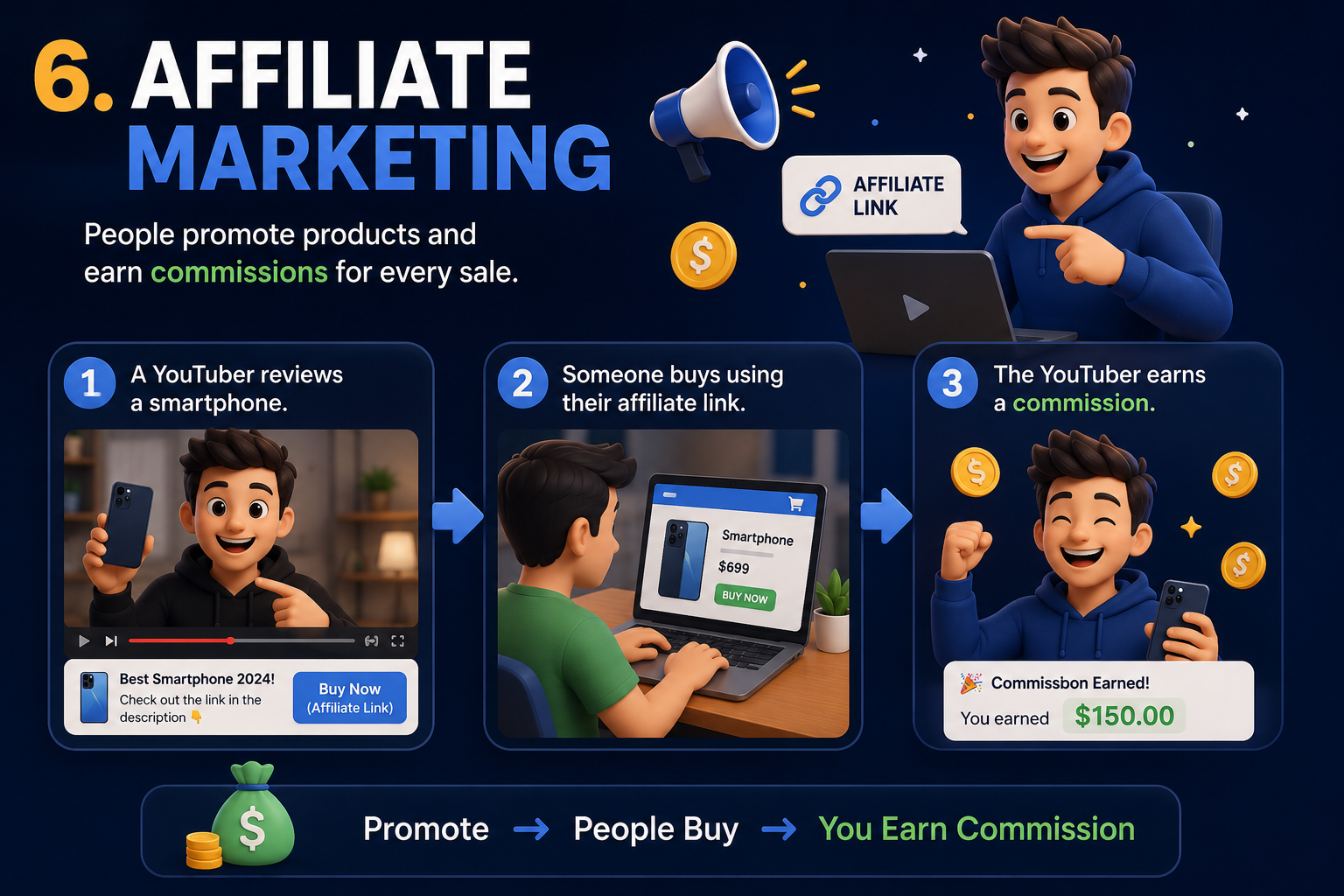
People promote products and earn commissions for every sale.
Example:
A YouTuber reviews a smartphone.
Someone buys using their affiliate link.
The YouTuber earns a commission.
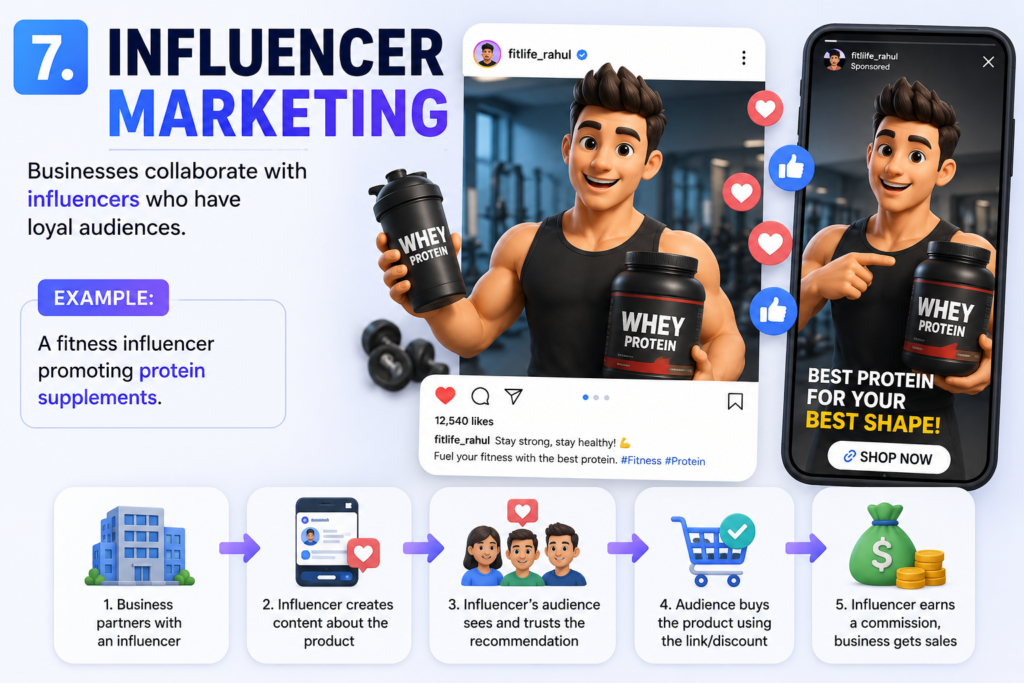
7. Influencer Marketing
Businesses collaborate with influencers who have loyal audiences.
Example:
A fitness influencer promoting protein supplements.
9. Mobile Marketing
Marketing specifically designed for smartphones.
Examples:
- SMS
- Push notifications
- Mobile apps
- WhatsApp Marketing
Digital Marketing Funnel
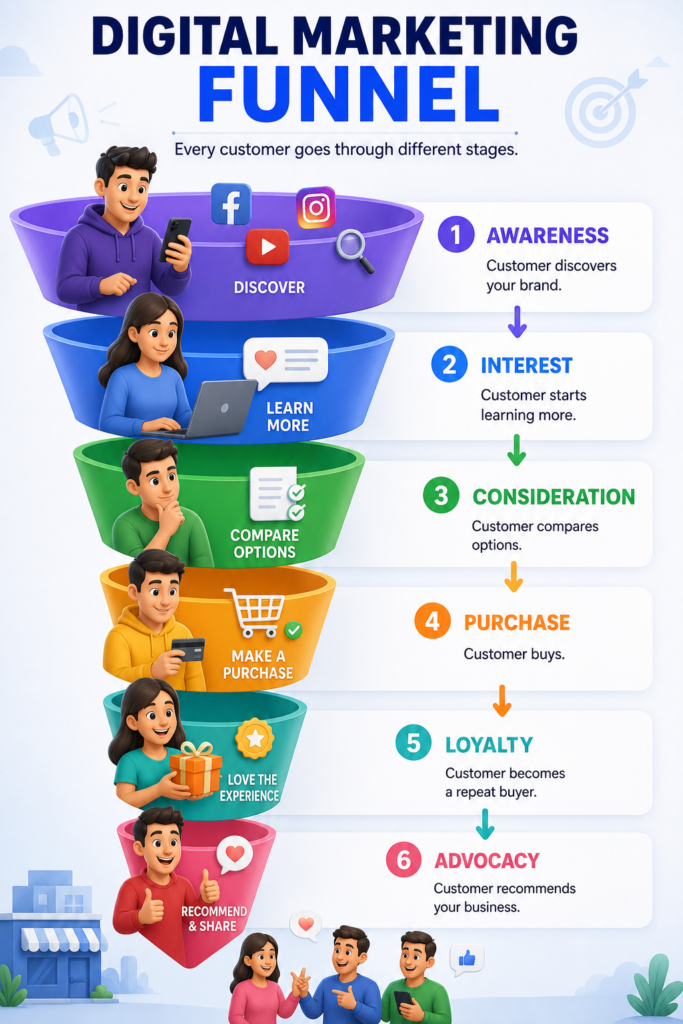
Every customer goes through different stages.
Awareness
Customer discovers your brand.
↓
Interest
Customer starts learning more.
↓
Consideration
Customer compares options.
↓
Purchase
Customer buys.
↓
Loyalty
Customer becomes a repeat buyer.
↓
Advocacy
Customer recommends your business.
Essential Digital Marketing Skills
A digital marketer should know:
- SEO
- Google Ads
- Facebook Ads
- Content Writing
- Social Media Marketing
- Email Marketing
- Graphic Design
- Video Editing
- Copywriting
- Analytics
- AI Tools
- Marketing Automation
Popular Digital Marketing Tools
SEO
- Google Search Console
- Google Analytics
- Ahrefs
- SEMrush
- Ubersuggest
Design
- Canva
- Adobe Photoshop
Social Media
- Meta Business Suite
- Buffer
- Hootsuite
- Mailchimp
- ConvertKit
Website
- WordPress
- Elementor
Advantages of Digital Marketing
Cost Effective
Small businesses can compete with large brands.
Targeted Audience
Reach specific people based on:
- Age
- Location
- Interests
- Gender
- Device
Measurable Results
Track:
- Visitors
- Clicks
- Sales
- Leads
- Revenue
Better Customer Relationships
Interact directly with customers.
Challenges of Digital Marketing
Although powerful, digital marketing also has challenges.
These include:
- High competition
- Constant algorithm changes
- Learning new tools
- Increasing advertising costs
- Content saturation
Continuous learning is essential.
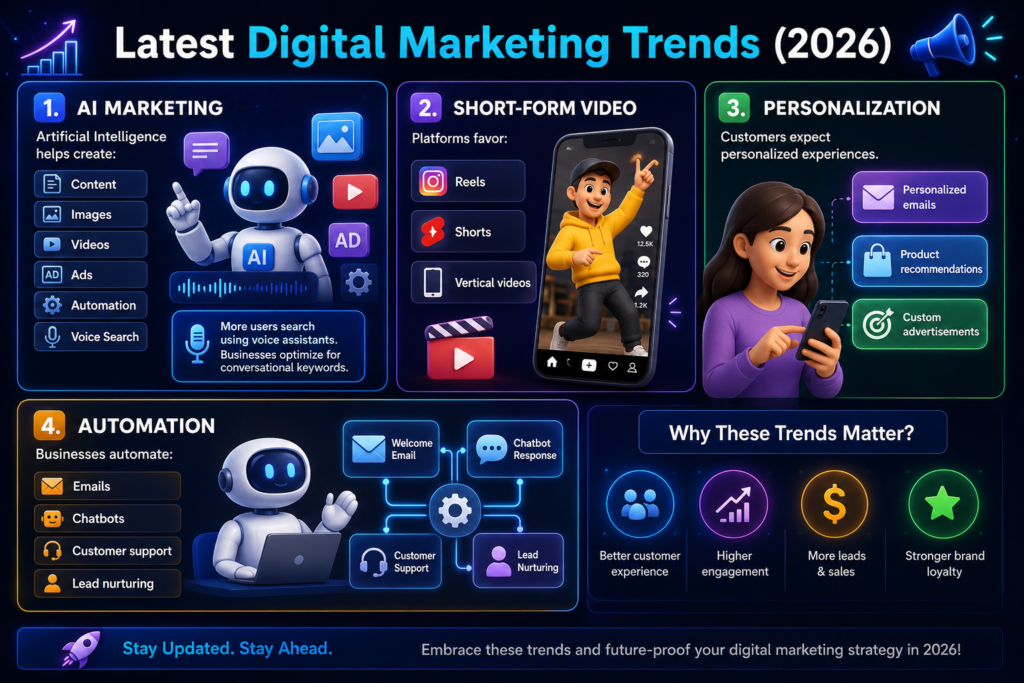
Latest Digital Marketing Trends (2026)
AI Marketing
Artificial Intelligence helps create:
- Content
- Images
- Videos
- Ads
- Automation
Voice Search
More users search using voice assistants.
Businesses optimize for conversational keywords.
Short-Form Video
Platforms favor:
- Reels
- Shorts
- Vertical videos
Personalization
Customers expect personalized experiences.
Examples:
- Personalized emails
- Product recommendations
- Custom advertisements
Automation
Businesses automate:
- Emails
- Chatbots
- Customer support
- Lead nurturing
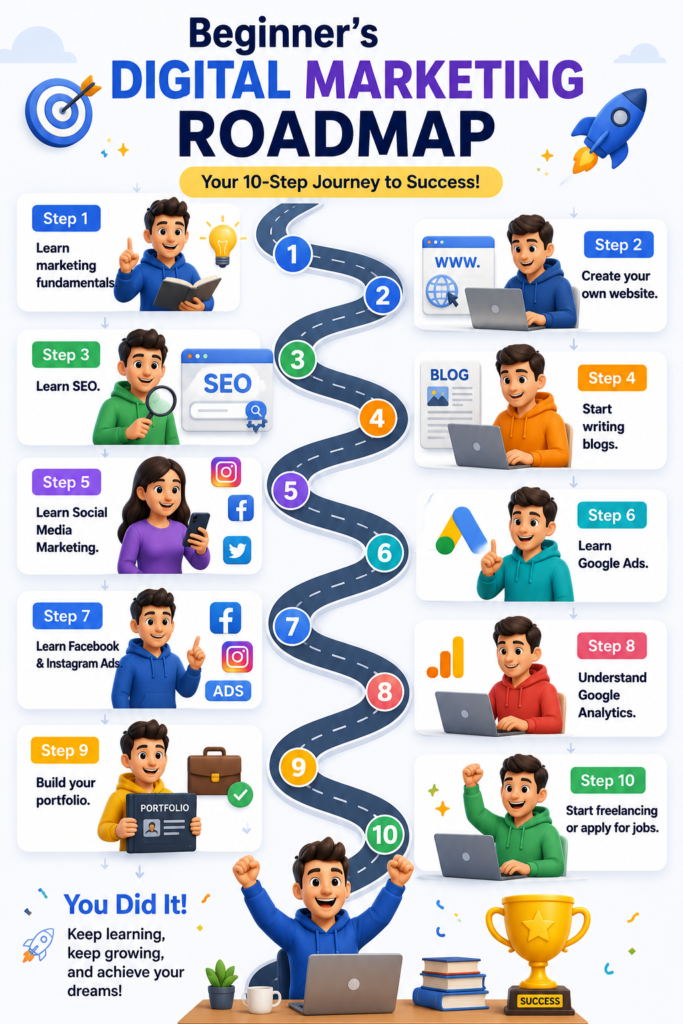
Beginner’s Digital Marketing Roadmap
Step 1
Learn marketing fundamentals.
↓
Step 2
Create your own website.
↓
Step 3
Learn SEO.
↓
Step 4
Start writing blogs.
↓
Step 5
Learn Social Media Marketing.
↓
Step 6
Learn Google Ads.
↓
Step 7
Learn Facebook & Instagram Ads.
↓
Step 8
Understand Google Analytics.
↓
Step 9
Build your portfolio.
↓
Step 10
Start freelancing or apply for jobs.
Common Mistakes Beginners Make
- Ignoring SEO
- Posting inconsistent content
- Buying fake followers
- Not tracking analytics
- Focusing only on selling
- Ignoring mobile users
- Using poor-quality visuals
- Not understanding the target audience
Career Opportunities in Digital Marketing
Digital marketing offers a wide range of career paths:
- SEO Specialist
- Content Writer
- Social Media Manager
- PPC Specialist
- Email Marketing Executive
- Affiliate Marketer
- Digital Marketing Manager
- Performance Marketer
- Marketing Automation Specialist
- Freelancer
- Agency Owner
- E-commerce Marketing Expert
Final Thoughts
Digital marketing is no longer optional—it’s essential for businesses and professionals alike. Whether you want to grow a brand, start an online business, or build a rewarding career, mastering digital marketing gives you the ability to connect with the right audience, measure your results, and scale your success.
The best way to learn is by doing. Create a website, publish content consistently, explore SEO, experiment with social media campaigns, and analyze your performance. As technology and consumer behavior evolve, staying curious and continuously learning will keep you ahead of the competition.
Start small, stay consistent, and remember: every successful digital marketer began as a beginner.